
If you’re just starting out behind the wheel, crossroads might feel a bit daunting, but you’ll encounter them everywhere, so it’s important to know how they work. So, what is a crossroad? Simply put, it’s a point where two roads meet, allowing vehicles to travel in different directions. These range from quiet rural lanes to busy city streets, and knowing how to navigate them is key to passing your driving test and becoming a confident driver.
Whether you’re taking driving lessons in Bedford or preparing for your theory test, mastering crossroads makes you a safer, more confident driver.
What is a crossroad? A guide for learner drivers
This article breaks down the key things you need to understand about crossroads, from basic definitions to practical driving tips, helping you feel more prepared for lessons and your driving test.
Here’s a quick guide to the topics we’ll cover:
- What is a crossroad in the UK?
- What is an unmarked crossroad?
- Difference between crossroads and junction
- Crossroad sign examples
- Who has right of way on a crossroad?
- Common mistakes learners make at crossroads
- Tips for navigating crossroads confidently
- Crossroads in rural vs urban areas
- Crossroads and driving test preparation
What is a crossroad in the UK?
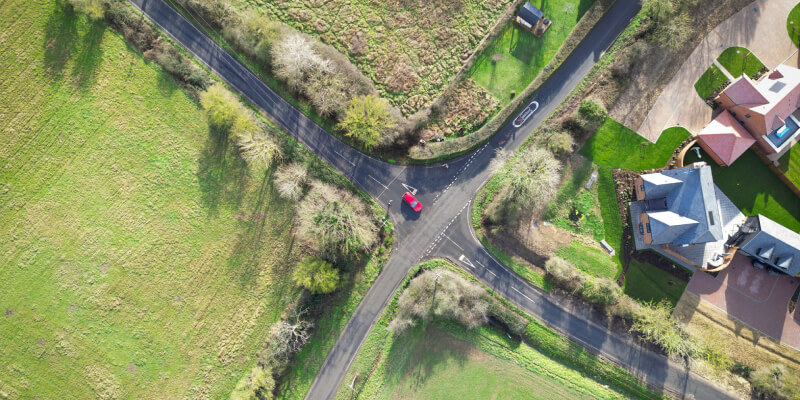
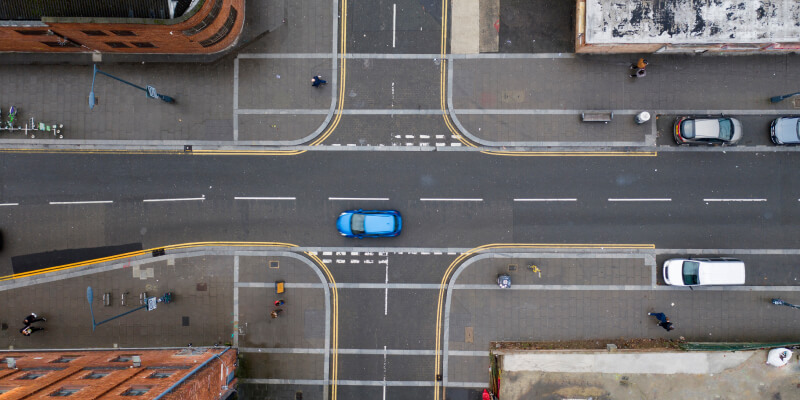
In the UK, a crossroad is where two roads cross, creating four directions. You’ll often encounter these intersections, whether on a suburban street, a busy town centre, or a rural lane. They test observation, judgement, signalling, and lane positioning.
Urban crossroads can be busy places, with multiple lanes, traffic lights, buses, cyclists, and lots of pedestrians around. That’s why it’s so important to keep your eyes moving and check your mirrors regularly. Picture yourself coming up to a town centre crossroad: there’s a cyclist approaching from the left, a pedestrian waiting to cross, and a car turning right across your path. You’ll need to judge what each road user is doing, adjust your speed, and make your intentions clear with your signals.
Rural crossroads can seem pretty quiet, but they’re not always as straightforward as they look. You might be driving along a country lane and not see much at first, then suddenly realise a hedge is blocking your view and there’s a car coming from the right quicker than you expected. Because of that, it’s always best to ease off the speed and take a moment to properly check what’s around you before moving on.
During driving lessons in Bedford, instructors often focus on judgment and observation, giving learners practice with various crossroads and traffic. The main takeaway: a crossroad isn’t just where roads meet—it’s where careful decisions matter most.

What is an unmarked crossroad?
An unmarked crossroad is basically a junction without any traffic lights, stop signs, or give-way signs. You’ll often come across them on quiet residential streets, side roads, or out in the countryside. With nothing to tell you who should go first, it really comes down to paying attention, taking your time, and using your judgement to decide when it’s safe to move.
Approaching an unmarked crossroad safely:
1. Slow down: Ease off your speed as you approach so you’ve got enough time to take everything in and react if needed.
2. Scan all directions: Have a proper look left and right, and ahead too, just in case something is coming that you didn’t notice at first.
3. Be ready to stop: Even if it seems clear, don’t assume it will stay that way—another vehicle could appear suddenly.
4. Communicate: Use your indicators in good time and, where possible, make eye contact with other drivers so everyone knows what’s happening.
5. Proceed cautiously: Only move off when you’re sure it’s safe, and you’ve had a good look at what’s around you.
Unmarked crossroads often feature in practical driving tests because they test a learner’s judgement, observation skills, and patience. For example, during a lesson, you might practise a scenario where two cars arrive simultaneously from different directions. Correctly assessing who has priority, slowing down appropriately, and proceeding smoothly will demonstrate good driving habits.
The main challenge with unmarked crossroads is the lack of automatic priority. Unlike controlled intersections, you can’t rely on traffic lights or signs—you must anticipate other drivers’ behaviour and proceed safely.
Difference between crossroads and junction
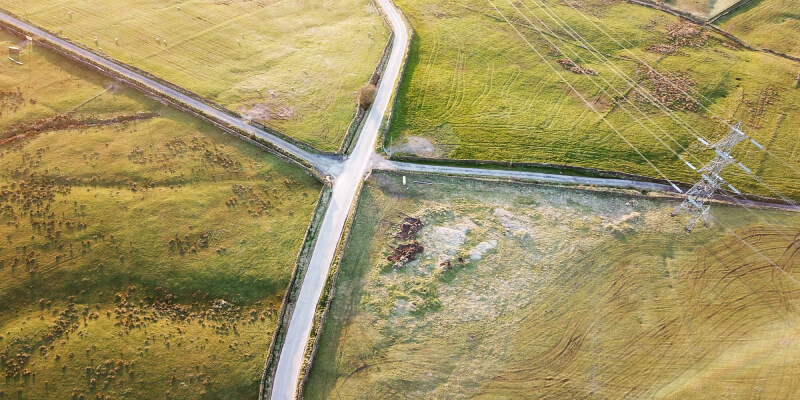
While all crossroads are junctions, not every junction is a crossroad. Understanding the difference is crucial for learners, as it helps them know what to expect and how to approach each type safely.
- Junctions: Any point where two or more roads meet. This can include things like T-junctions, Y-junctions, staggered junctions, mini-roundabouts, and crossroads.
- Crossroads: A specific type of junction where two roads cross over each other, creating four possible directions to travel in.
Examples of junction types:
- T-junction: One road comes to an end, so you’ll need to turn either left or right. In most cases, you’ll be giving way to traffic on the main road.
- Y-junction: These join at an angle rather than straight on, so you’ll need to pay a bit more attention to your positioning and what’s coming from each side.
- Staggered junction: Two side roads offset on opposite sides of a main road. Drivers must handle each turn separately.
- Mini-roundabouts: Circular junctions with priority rules.
The rules for giving way aren’t the same for every junction — it really depends on the type you’re coming up to. At a T-junction, you’ll usually give way to traffic on the main road coming from the left and right. Crossroads can be trickier because cars might come from all four directions, so you’ve really got to take a good look around and try to guess what other drivers are doing. In lessons, instructors often go over these differences in a bit of detail, just so learners don’t panic when they hit a junction for the first time.
Knowing the difference isn’t just theory—it affects your exam. Examiners expect you to identify the junction type and respond correctly.
Crossroad sign examples
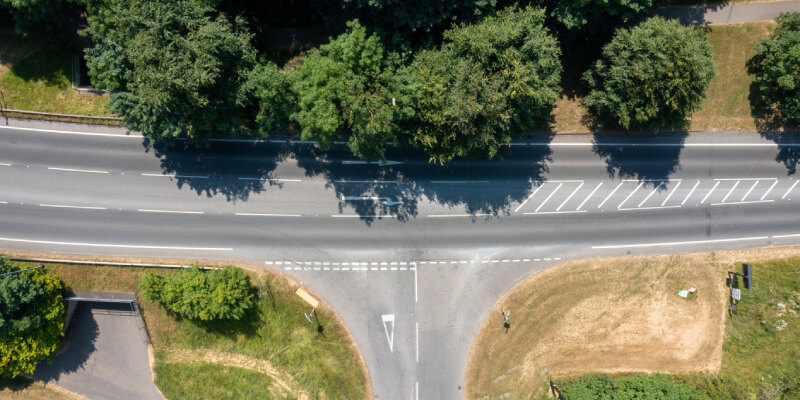
Signs are your first clue about an upcoming crossroad and help you plan your approach. Common signs include:
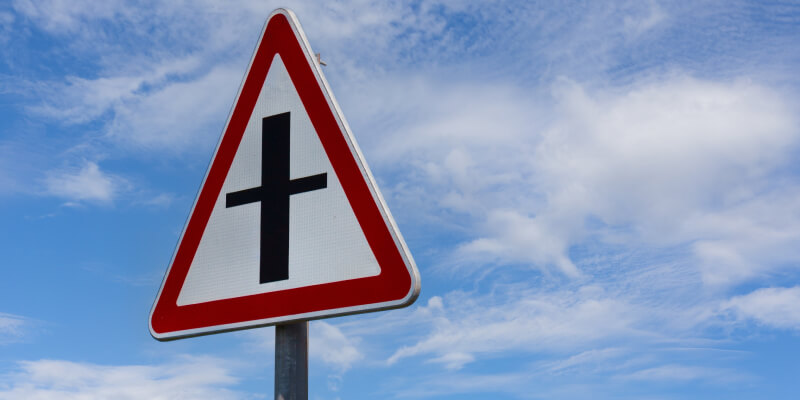
- Crossroad warning sign: A red triangle with a black cross that lets you know a junction is coming up.
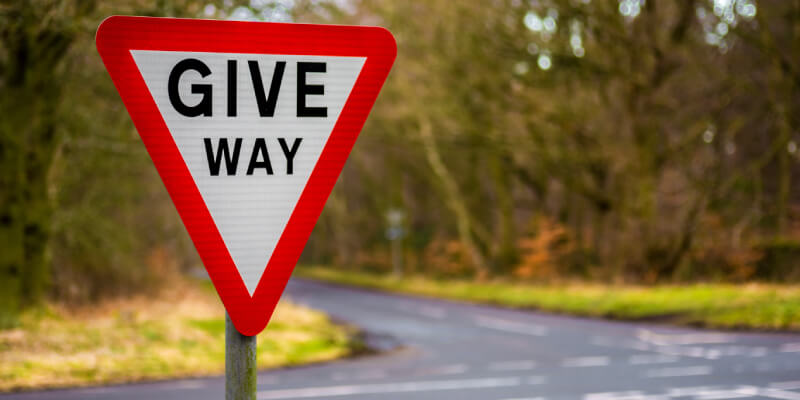
- Give way sign: An upside-down triangle that tells you to let traffic on the other road go first.
- Stop sign: A red octagon that requires you to come to a complete stop before moving on.
- Traffic lights: These control busier intersections and tell you when it’s safe to go.
- Box junction markings: Yellow criss-cross lines that show the junction must be kept clear so traffic can flow.
When you’re approaching a crossroad, it’s a good idea to spot any signs early so you’ve got time to adjust your speed and position in the lane. For instance, if you see a give-way sign on a rural crossroads, you can slow down and take a proper look both ways. At a box junction, make sure you can cross completely without stopping; otherwise, you’ll end up blocking traffic.
Here’s a simple exercise for learners: during lessons, try spotting the signs at a junction and think through what you’d do before moving. Doing this repeatedly helps you get used to reading signs quickly and makes the practical test easier.
Controlled crossroads are generally easier for learners because the signs or lights dictate movement. Uncontrolled intersections rely entirely on your judgement and observation skills.
Who has right of way on a crossroad?
Right-of-way at a crossroad depends on whether it is controlled or uncontrolled.
- Controlled crossroads: Traffic lights, stop, and give-way signs dictate who moves first. Always obey signals—green does not mean “rush through,” and amber means prepare to stop.
- Uncontrolled crossroads: Technically, no vehicle has automatic priority. The general rule is to give way to vehicles approaching from your right, but always assess the situation carefully.
Example scenarios:
- Two cars arrive simultaneously at an unmarked crossroad: the car on the right goes first, so you need to be ready and aware.
- You approach a stop sign with a cyclist on the left: let them pass before you move off.
- The traffic light turns green, but a pedestrian is still crossing: wait until the way is clear.
Even if it’s your right of way, it’s usually best to play it safe. A lot of learners make the mistake of assuming they’ve got priority or rushing off too quickly. Just taking a moment to watch what’s going on and thinking about what other drivers might do goes a long way — it keeps you safe and usually makes a better impression on your examiner too. And if you’re ever unsure, when in doubt, the Highway Code is a useful guide to figuring out who should go first.
Common mistakes learners make at crossroads
Learners often struggle with crossroads, commonly make errors such as:
- Failing to scan all directions: Sometimes people just focus straight ahead and don’t notice what’s coming from the sides, which can catch you off guard.
- Misjudging speed/distance: You might think there’s enough time to pull out, but another vehicle could be closer than it looks, so it’s easy to make a mistake.
- Incorrect lane positioning: Many learners end up in the wrong lane for the turn they want to take, which can be confusing for everyone.
- Hesitation or over-cautious stopping: Pausing too long or stopping when it’s not necessary can slow things down and sometimes confuse other drivers.
- Not signalling clearly: If you don’t use your indicators properly, other road users can be left guessing what you’re about to do, which isn’t ideal.
Tips to correct mistakes:
- Practice progressive scanning—check mirrors, left, right, and ahead continuously.
- Slow down well in advance to assess traffic.
- Signal early, even for minor manoeuvres.
- Practice crossroads of all types during lessons to build confidence.
It’s generally more important to pay attention and keep observing what’s happening than to rush and make a mistake.
Tips for navigating crossroads confidently
Building confidence at crossroads comes from both practice and technique. Some key tips:
- Progressive observation: Keep observing and watch for vehicles, cyclists, and pedestrians as you approach and enter the junction.
- Anticipate other drivers: Pay attention to brake lights, indicators, and where they’re looking, so you can guess what they might do.
- Signal clearly: Make sure other road users can see what you plan to do by using your indicators properly.
- Know the rules: Be aware of who has priority, how lanes work, and what the signs are telling you.
- Practice different scenarios: Try out urban and rural crossroads, as well as controlled and unmarked ones, so you feel ready for anything.
Adding small exercises, like imagining multiple vehicles arriving simultaneously or predicting what a cyclist will do, improves reaction time and decision-making. Commit to regular practice in different traffic conditions to build your skills—take every opportunity to boost your confidence at crossroads.
Crossroads in rural vs urban areas
Crossroads can be very different depending on where you are:
Urban: These often have traffic lights, multiple lanes, buses, pedestrians, and cyclists. The tricky part is keeping track of everything at once — scanning the lanes, watching for pedestrians, and dealing with congestion.
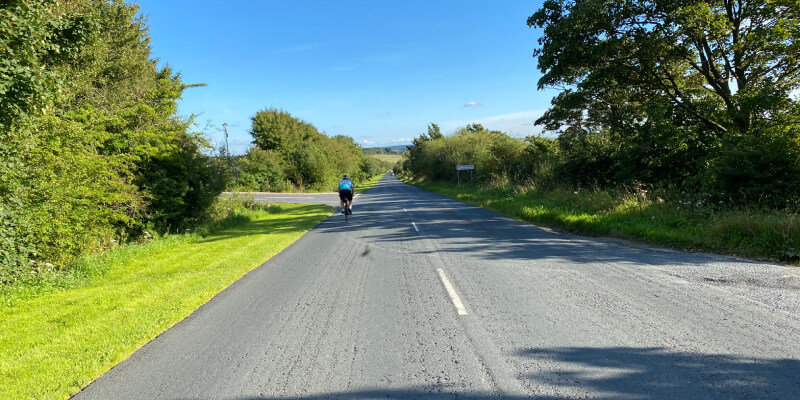
Rural: In the countryside, crossroads are often unmarked, lanes can be narrow, visibility is limited, and traffic tends to move faster. Slowing down, looking carefully in all directions, and being ready to stop is key.
During your driving test, you could come across a rural crossroad where hedges are obstructing your view, where you’ll need to stop and creep forward to see if any vehicles are coming. Urban crossroads can be a bit different; there may be several hazards, like cyclists weaving through traffic while cars are turning.
Crossroads and driving test preparation
Examiners expect learners to demonstrate:
- Observation: Checking all directions and mirrors.
- Positioning: Correct lane and turning alignment.
- Speed control: Smooth approach without unnecessary braking.
- Right of way: Correctly assessing who has priority.
- Communication: Clear signalling and eye contact.
For example, in a driving test, you might be asked to approach a busy crossroad with vehicles on all sides. You must choose the correct lane, scan carefully, signal your turn, and proceed when it is safe.
Practising on a variety of crossroads under supervision helps learners gain confidence and reduce nerves on test day. Taking lessons with a driving school in Bedford provides structured practice across both urban and rural crossroads, giving learners the experience and guidance needed to succeed. If you don’t feel quite ready after practising more complex crossroads, you might decide to change your driving test to give yourself a bit more time.
Final thoughts on mastering crossroads
Crossroads are an unavoidable part of driving and are a key test of your observation, judgement, and decision-making skills. From understanding what a crossroad is in the UK, navigating unmarked intersections, recognising signs, to knowing who has right of way, mastering these skills is essential for safe, confident driving.
Practice, awareness, and patience are the keys. The more time you spend practising under supervision, the more instinctive safe decision-making at crossroads becomes. Whether you’re taking your first driving lesson or preparing for your practical test, focusing on observation, signalling, and anticipation will keep you and other road users safe.